ETL PIPELINE FOR DATA ENGINEERS
Spark tutorial · PySpark.in
What is ETL in Data Engineering?
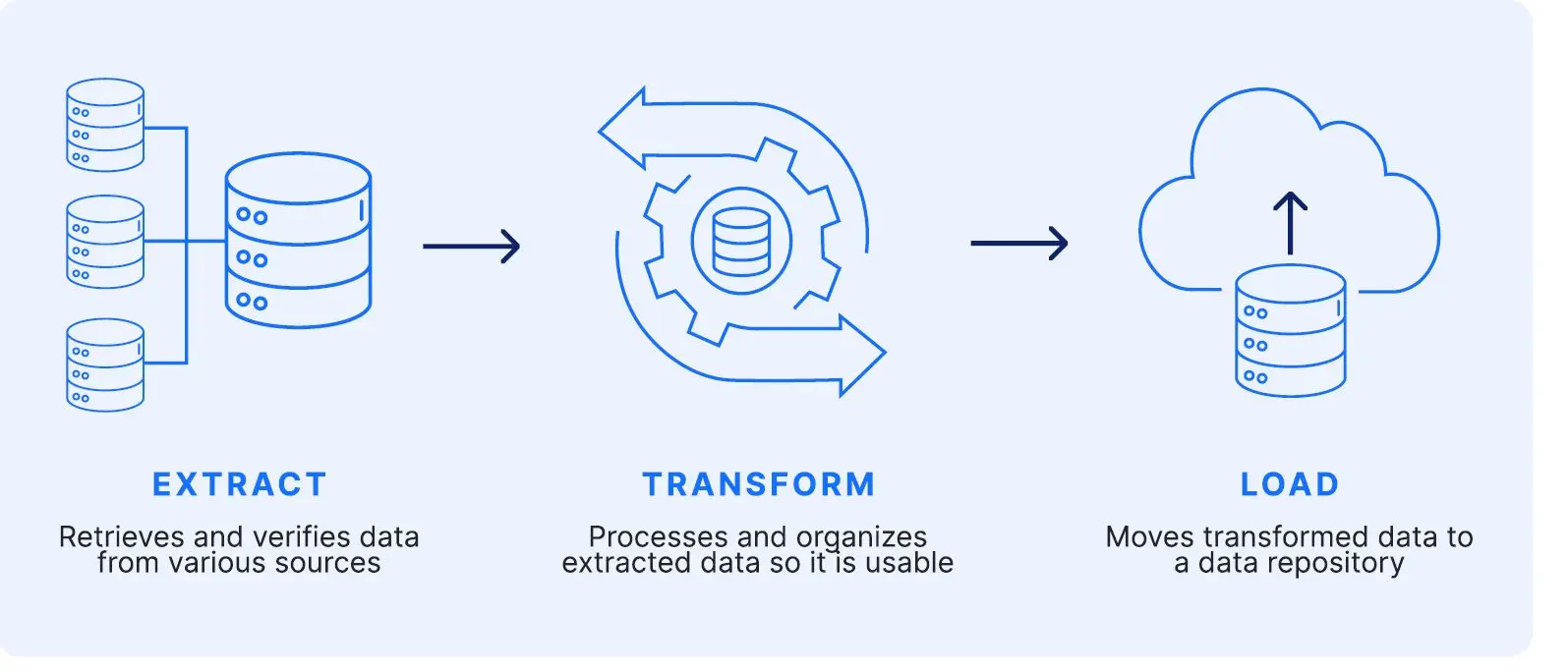
ETL (Extract, Transform, Load) is the process of moving raw data from
different sources into a centralized storage system.
Extract - Data is collected from multiple sources such as databases, APIs,
logs, IoT devices, or streaming platforms.
Transform - The raw data is cleaned, standardized, enriched, and reshaped to
match business requirements.
Load - The processed data is stored in a target system like a data warehouse
(Snowflake, Redshift, BigQuery) or a data lake (S3, GCS, HDFS).
For Data Engineers, ETL pipelines are critical to ensure that data is reliable,
The ETL Process explain
Why is ETL Important?
ETL pipelines are the backbone of data-driven organizations. Their importance lies
in:
Analytics & Business Intelligence (BI):
Structured, aggregated data supports dashboards and reports.
Leadership can make better decisions based on accurate, timely insights.
Machine Learning & Data Science:
High-quality data enables effective feature engineering.
Models perform better when trained on clean, consistent datasets.
Operational Efficiency:
Automates repetitive data preparation tasks.
Reduces manual effort and ensures data freshness
Data Consistency:
Establishes a single source of truth, avoiding conflicts across teams.
Maintains data governance and compliance.
Traditional ETL vs Modern ELT
ETL pipelines are the backbone of data-driven organizations. Their importance lies
in:
Traditional ETL (Extract → Transform → Load):
- Data is transformed before loading into the warehouse.
- Requires external ETL tools or processing engines.
- Was efficient when compute and storage were expensive and limited.
Modern ELT (Extract → Load → Transform):
- Raw data is loaded first into the warehouse, and transformations are
performed inside it.
- Cloud-native systems like Snowflake, BigQuery, and Redshift make this
approach faster and more scalable.
- Simplifies architecture by centralizing transformations in the warehouse.
Key Difference:
ETL - Transformation happens outside the warehouse.
ELT - Transformation happens inside the warehouse after loading.
What is ETL?
Breakdown of Extract → Transform → Load
Extract
- In this step, data is pulled from multiple sources such as relational databases,
NoSQL systems, APIs, log files, and streaming platforms like Kafka.
- The goal is to gather all relevant data, whether structured, semi-structured, or
unstructured, in its raw form.
- A key challenge during extraction is ensuring that the data is collected
completely and accurately without any loss.
Transform
- Transformation is the process of converting raw data into a clean, consistent,
and usable format.
- Typical operations include cleaning the data (removing duplicates and
handling nulls), standardizing formats (data types, units, and structures), and
aggregating information (summing sales, calculating averages, etc.).
- It can also involve enriching data by joining it with other datasets or creating
new derived fields.
- This step ensures the data is aligned with business logic and ready for
analysis.
Load
The final step involves loading the transformed data into a destination system
such as a data warehouse (Snowflake, BigQuery, Redshift), a data lake (S3,GCS, HDFS), or operational databases.
Loading can be done in two ways:
a. Full load, where all the data is reloaded each time.
b. Incremental load, where only new or updated records are loaded.
02 Batch vs Real-Time Pipelines
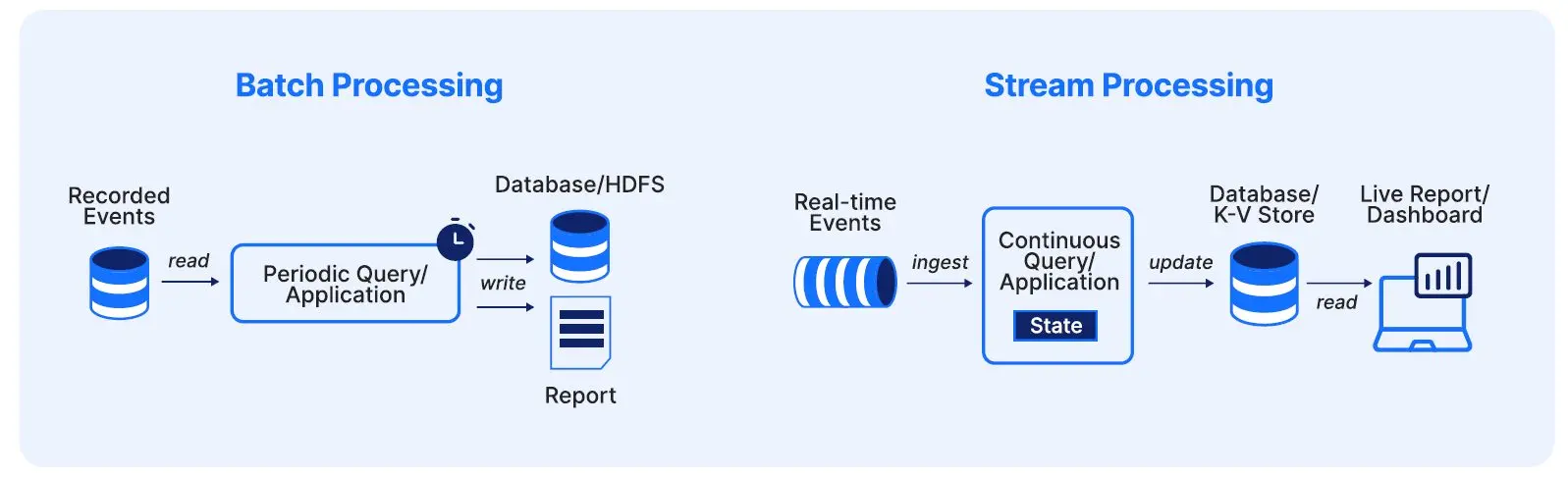
Batch ETL
- Batch pipelines process large amounts of data at scheduled intervals such as
hourly, daily, or weekly.
- This approach is commonly used for periodic reporting and historical analysis
where real-time data is not critical.
- Tools such as Apache Airflow, Apache Spark (batch mode), and AWS Glue are
often used to build batch pipelines.
Example: A daily sales report that processes all transactions at midnight.
Real-Time (Streaming) ETL
- Real-time pipelines process and deliver data continuously as it is generated.
- This method is essential for time-sensitive use cases such as fraud detection,
stock trading, or personalized recommendations.
Trade-off
- Batch pipelines are simpler to build and more cost-effective, but they do not
provide the most up-to-date data.
- Real-time pipelines deliver fresh insights with low latency but are more
complex and expensive to maintain.
Common Challenges in ETL
1 Handling Large Data Volumes
- Modern organizations generate terabytes or even petabytes of data, which
requires highly scalable ETL solutions.
- Distributed processing frameworks like Apache Spark and Apache Flink are
often needed to manage this scale efficiently.
2 Schema Drift
- Over time, data sources often evolve by adding new fields, changing data
types, or modifying formats.
- ETL pipelines must be designed to handle these schema changes gracefully
without breaking.
3 Data Quality Issues
- Inconsistent, missing, or duplicate records can reduce the reliability of
insights.
- Data quality checks and validation rules are necessary to ensure trust in the
processed data.
4 Latency and Performance
- Balancing the need for fast data availability with system costs can be difficult.
- Real-time pipelines provide low latency but require significant infrastructure,
while batch pipelines are slower but cheaper.
5 Reliability and Fault Tolerance
- ETL pipelines must be resilient and capable of recovering from failures without
data loss.
- Monitoring, logging, and retry mechanisms are critical for maintaining
reliability.
More Spark tutorials
- about pyspark
- text diagram
- Apache Spark Runtime Architecture
- Introduction to RDD
- Actions vs Transformations
- Lazy Evaluation in PySpark
All tutorials · Try the free PySpark compiler · Practice challenges